




Why Your Garage Floor Deserves Better Than Bare Concrete
Your garage is the first thing you see when you get home and the last thing you see when you leave. Right now it's probably showing oil stains from your last project, tire marks that won't scrub out, and that gray concrete dust that tracks into your house no matter how many times you sweep.
Bare concrete is porous. Every spill soaks in. Every winter, road salt and de-icer chemicals eat away at the surface. You've probably noticed the powder on your garage floor — that's your concrete literally breaking down from the freeze-thaw cycles we get here in Wisconsin.
The curb appeal factor is real. When neighbors in Appleton and Neenah install garage floor coatings, their homes stand out. An epoxy floor catches eyes during showings and adds that "well-maintained" impression buyers pay for.
Here's what happens without protection: hairline cracks expand, the surface becomes increasingly porous, stains become permanent, and eventually you're looking at concrete replacement instead of coating. A two-car garage floor replacement runs $4,000-$8,000. Professional epoxy coating costs a fraction of that and prevents the damage that leads to replacement.
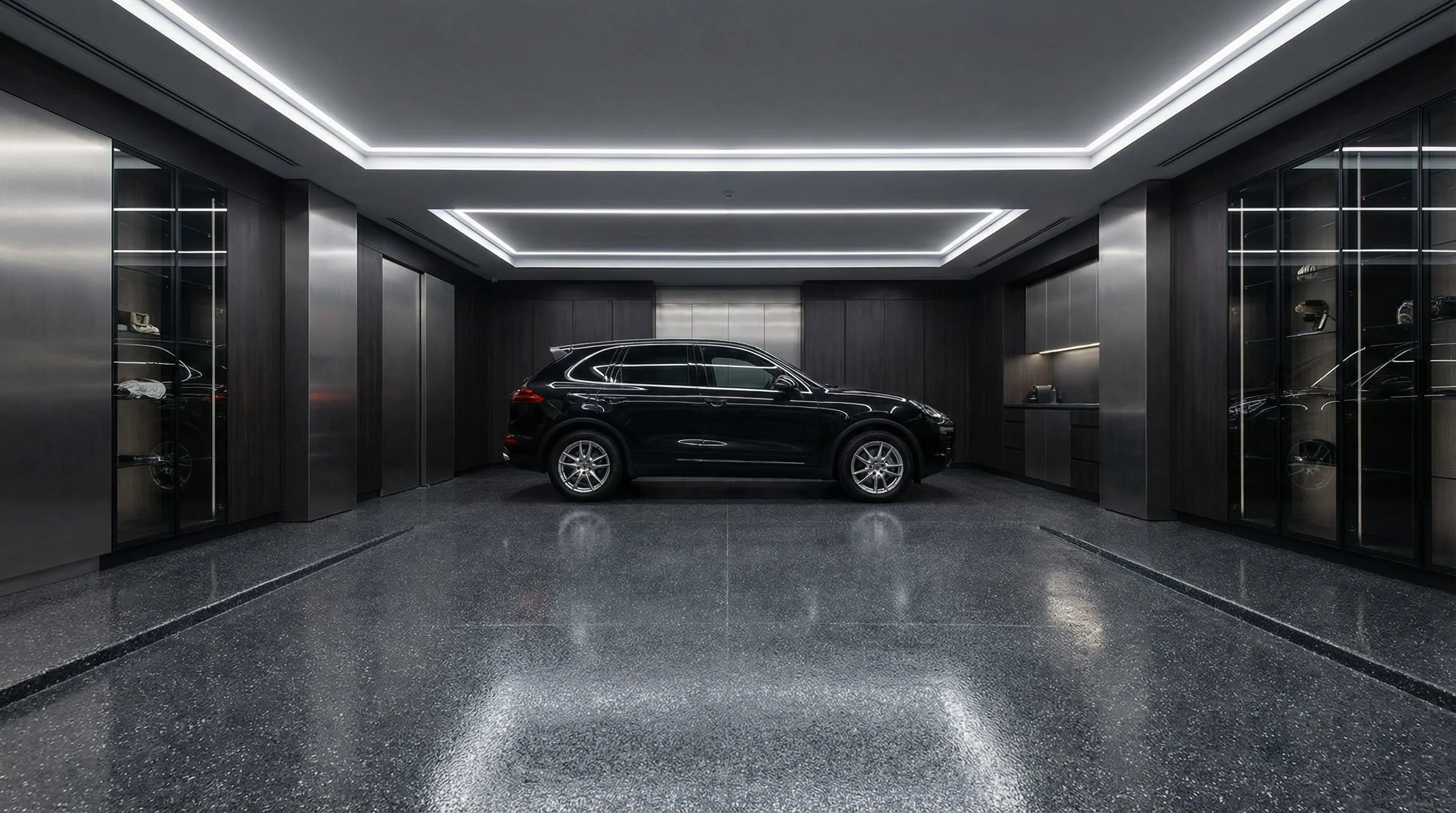
The transformation isn't just aesthetic. A properly coated garage floor is easier to clean (spills wipe up instead of soaking in), brighter (the glossy surface reflects your overhead lights), and more durable than bare concrete ever was. You'll actually want to park inside instead of leaving your car in the driveway.
Homeowners in Green Bay and Oshkosh are coating their garage floors for the same reason you're researching it — because a garage should be functional workspace, not a deteriorating cave you avoid.
What Does Garage Floor Epoxy Cost in the Fox Valley?
Expect to pay $3-$7 per square foot for professional epoxy coating in the Fox Valley. The wide range depends on surface condition, coating type, and decorative options.
The base price includes surface preparation (diamond grinding or acid etching), crack repair, primer coat, epoxy application, and decorative color flakes. What drives the price up: extensive concrete repair, moisture mitigation, polyaspartic topcoat upgrades, and full-broadcast flake coverage.
Flake vs. Solid Color Options
Decorative flakes are worth the upgrade — they hide minor surface imperfections, add slip resistance, and create visual depth. Most contractors include standard flake coverage (20-30% coverage) in their base price. Full-broadcast flake (80-100% coverage) adds $1-$2 per square foot but creates that premium showroom look.
Color options range from neutral grays and tans (popular in Kaukauna and Menasha) to bold metallics and multi-color blends. The flakes are vinyl chips that get broadcast into the wet epoxy, then sealed with a clear topcoat.
DIY vs. Professional Installation
The DIY kits from big box stores fail because garage floors need mechanical surface preparation. Acid etching (the DIY method) doesn’t create the profile epoxy needs for permanent adhesion. Professional diamond grinding removes the concrete cream layer and creates the open pore structure that lets epoxy bond at the molecular level.
Factor in your time too. DIY takes multiple weekends (and often fails within a year). Professional installation is 2-3 days from start to drive-on finish.
The Garage Floor Epoxy Installation Process
Professional installation takes 2-3 days depending on garage size and concrete condition. Here’s what happens from empty garage to finished floor.
Surface Preparation & Concrete Repair
Day 1Day one is all prep work — and this is where professionals earn their money. Diamond grinding removes the top layer of concrete along with any existing sealers, oils, or contaminants, creating the surface profile epoxy needs to bond permanently. Cracks get routed out and filled with flexible epoxy filler. Active moisture problems need to be addressed before coating — moisture testing is critical, especially in older homes in Appleton and Green Bay.
Application & Flake Broadcast
Day 2Once the floor is ground, cleaned, and dry, the primer coat goes down. The next day, the color coat gets applied with roller and squeegee. While this coat is wet, decorative flakes get broadcast by hand — full-broadcast coverage requires multiple passes and an experienced eye. After the flakes set overnight, the contractor scrapes off any vertical flakes, then applies the clear topcoat for that high-gloss finish.
Cure Schedule & Seasonal Considerations
Day 3–7Walk on the floor in 24 hours. Light foot traffic in 48 hours. Wait 5-7 days before driving on it. Temperature matters tremendously in Wisconsin — epoxy needs 50-90°F for proper curing. Spring and fall (April-June, September-October) are prime seasons. Winter installation is possible with heat but adds cost and cure time. Professional contractors in Oshkosh and Neenah time their installs around weather forecasts.
How to Choose a Garage Floor Epoxy Contractor
You'll get quotes ranging from $1,500 to $5,000 for the same garage. The difference isn't just price — it's preparation method, material quality, and warranty backing.
Experience and Portfolio Review
Ask to see photos of completed projects from 3+ years ago, not just fresh installs. A coating that looks good at one week might be peeling at one year. Contractors who've been serving the Fox Valley for 5+ years will have plenty of aged examples.
Request references from jobs done 2-3 winters ago. Wisconsin's freeze-thaw cycles and road salt exposure are the real test. A floor that survived three winters without hot tire pickup or edge peeling was installed correctly.
Check their portfolio for projects similar to yours. Residential garages require different expertise than commercial warehouses. Look for work in Kaukauna, Menasha, and surrounding Fox Valley communities where they understand local concrete conditions and climate challenges.
Warranty and Prep Method Verification
The warranty tells you everything about their confidence. Look for:
- Minimum 5-year warranty on adhesion and coating integrity
- Coverage for hot tire pickup (shows they use proper materials and prep)
- Written exclusions (what voids the warranty — usually chemical spills or mechanical damage)
- Company longevity (a 10-year warranty is worthless if they're out of business in two years)
Ask specifically about their prep method. The correct answer is diamond grinding or shot blasting — mechanical surface preparation. If they say "acid etching" or "we clean it really well," walk away. That's DIY-level prep dressed up as professional work.
Questions to ask every contractor:
- What surface preparation method do you use? (Want to hear: diamond grinding)
- Do you moisture test the slab? (Want to hear: yes, with calcium chloride test)
- What products do you use? (Research the brand — avoid big-box store products)
- What's the mil thickness of your color and clear coats? (Thicker is better, 10+ mils total)
- Can you install in winter, and what's your process? (Shows experience with seasonal challenges)
- What's your cure schedule for drive-on traffic? (5-7 days is realistic, "24 hours" is a red flag)
Watch out for pressure tactics. Legitimate contractors in Appleton and Green Bay stay busy during prime season (spring and fall) and don't need to pressure you into signing same-day. They'll educate you about options, provide written quotes with clear scope of work, and give you time to decide.
The cheapest bid often means compromised prep work or inferior materials. The most expensive isn't always the best either. Look for detailed quotes that break down prep work, materials, square footage, and warranty terms.
Frequently Asked Questions
Epoxy typically lasts 10–20 years on a residential garage floor, depending on traffic, maintenance, and installation quality.
| Lifespan Factor | Light Use | Moderate Use | Heavy Use |
|---|---|---|---|
| Typical Duration | 15–20 years | 10–15 years | 7–10 years |
| Example | Occasional DIY garage | Active family garage | Commercial/frequent traffic |
| Maintenance Level | Minimal | Moderate (annual) | Frequent (quarterly) |
| Wear Patterns | Minimal gloss loss | Some dullness in traffic areas | Noticeable wear, possible thin spots |
Factors that extend lifespan:
- Professional installation — Proper prep and application prevent premature failure
- Moisture management — Moisture testing and mitigation prevent peeling and delamination
- Regular cleaning — Sweeping and occasional mopping preserve the finish
- Anti-slip topcoat — Polyurea or polyaspartic topcoats extend durability and add UV resistance
- Climate control — Temperature stability reduces expansion/contraction stress
Factors that shorten lifespan:
- Heavy vehicle traffic — Daily driving wears the finish faster
- Harsh chemicals — Road salt, de-icing chemicals, and aggressive cleaners accelerate degradation
- Poor prep or moisture — Failure to address moisture or skip surface prep causes peeling within 2–5 years
- DIY installation — Inadequate technique reduces durability by 30–50%
With proper maintenance and professional installation, most homeowners see 12–15 years of excellent appearance before considering a refresh or top coat.
Related Articles

Is an Epoxy Garage Floor Worth It? Benefits, Drawbacks & Expert Insights
Weighing the cost of epoxy garage floors? Learn the real benefits, common drawbacks, how long they last, and when contractors say it's worth the investment.
Read Guide
Epoxy Garage Floor Cost — Complete Pricing Guide for Homeowners
Epoxy garage floor costs range from $3-12 per sq ft installed. Learn what drives pricing, how contractors estimate jobs, and what you should actually pay.
Read Cost Guide
Epoxy Garage Floor Services — What to Expect from Professional Installation
Learn what professional epoxy garage floor installation involves, how contractors prepare concrete, what systems they use, and what quality work should cost.
Read Guide
How Much Does It Cost to Epoxy a 2-Car Garage?
2-car garage epoxy costs $1,200-4,800 for professional installation. Learn what drives the price range and how contractors price 400-600 sq ft projects.
Read Cost Guide
DIY Epoxy Kits vs. Professional Installation — Why the Pros Win Every Time
Thinking about a DIY epoxy kit? Learn why professional epoxy installation delivers better results, lasts longer, and often costs less than failed DIY attempts.
Read Guide
Epoxy Flooring Cost Calculator — Estimate Your Project Before Calling a Pro
Calculate your epoxy garage floor project cost instantly. Input your garage size, coating type, and options to get accurate estimates before calling contractors.
Read Cost Guide
Best Epoxy for Garage Floors — What Top Contractors Actually Use
Learn what epoxy systems professional contractors actually use for garage floors, why they choose them, and what separates contractor-grade from DIY products.
Read Guide
Epoxy Garage Floor Maintenance — How to Clean & Protect Your Investment
Learn what contractors recommend for cleaning and protecting epoxy garage floors. Understand maintenance schedules, proper cleaners, when to reseal, and signs you need professional help.
Read Guide
Epoxy Garage Floor Colors — A Homeowner's Guide to Design Options
Explore epoxy garage floor color options from neutral to bold. Learn what contractors recommend, popular color combinations, and how to choose the right look.
Read Guide